
08 Only Mules & Horses
In this session, Mike Davies encourages us to be ready and willing to run, be easily steered, and raise other people to be the same. Do we encourage an environment where there is a priesthood of all believers and create a safe place for them to step out?
Transcript
Read transcript Hide transcript
Question. If you're gonna enjoy the countryside, if you're gonna go for a ride down the beach, would you rather ride a mule or a horse? Personally, I think a horse would be much more fun, much more exciting. See, a mule is stubborn, it stands there and you have to flog it for it to move.
A horse wants to run. A horse has got this power and it's got this sense of freedom and it wants to run. The horse is scarier because if you don't know what you're doing, it can run off and go wild. But if you know what you're doing and if the horse is broken and responds to the bit, you can steer it and control it easily.
Leading Horses, Not Mules
Question then as a community leader, or even as an elder, as a leader of any kind. Would you rather be leading horses or mules? Would you rather say to somebody, "We quite like the idea that you don't move until we flog you and beat you into doing something."
Or do we want people who are ready to run, who are just eager, who are hard to hold back? Horses that aren't broken are dangerous. Horses that just run but can't be steered are really dangerous. But if they can be steered, then they're an incredible privilege and blessing.
But my fear is sometimes as leaders, we can create mules. Because we can create a culture where people feel that they need permission or they need to be told before they're allowed to do anything. And for me, that isn't the culture of the Kingdom.
Yes, we hear a lot about, for example, Andrew's story of when he joined a particular church and he thought he was the man of God and "what are you going to offer me?" And he was told, "no, if you join us, you just make tea like everybody else."
The Priesthood of All Believers
And there's a principle there that we don't want people coming in saying, "I've got this ministry," whatever. We want people to come and submit. We want to develop friendships. Plus a principle is not a rule. Likewise, we read about the qualifications of elders and deacons.
But those are the qualifications of elders and deacons, not the qualifications of somebody who can pray in a community group. Or somebody who can play guitar in worship in a community group. Often we're restricting people and telling people they can't do something until they attempt some kind of measure of approval that we then say they can be released into things.
The scriptures tell us that there's a priesthood of all believers, not a priesthood of some believers, not a priesthood of respectable believers. You know, it shocks me when, if you think about it, we read the qualifications of an elder. And one of the things is an elder mustn't be a drunkard.
Now, we think that would be pretty obvious. But if you think about it, there must have been drunkards in the church that were performing certain functions and doing certain things. And certain people were thinking maybe they should be elders. Think about it. We've got to be a lot more open handed, because Jesus uses broken, messy people to do His will.
If the way Jesus works is we had to meet a certain standard before we were useful, then believe me, today, none of us would still be useful. We need, as leaders, to be risk takers. Risk takers within reason. Not stupid risk takers. But some people who can really take us forward, who can really break things open, who can really bring life are sometimes the people who are going to give us the wildest, scariest ride.
And yes, we must bring people to a point where we can train them and be able to steer them easily, and guide them easily, and halt them easily. But we don't want to turn horses into mules. We don't want to take people who are full of life, and faith, and enthusiasm, and hope, and then constrict them.
Don’t Let Passion Become Mediocrity
I remember speaking to a young lady in JoshGen a few years ago and she's so passionate about evangelism. She got saved and some of her friends and family said, "Oh, you're a bit weird now. You're a bit over the top. But don't worry.
You'll calm down and over time you'll become more normal." And I said to her, "please don't. Please don't. Keep that fire and that passion that you have now. Don't let it become mediocrity." Somebody once said this, "The average Christian is so lukewarm that when somebody's really passionate, we think they've got a fever."
We should all be passionate, we should all be raring to go. And as leaders, our responsibility isn't to hold people back primarily. Our job is to see people released into the fullness of what God has for them. That isn't to say we don't hold some people back in some circumstances for some reasons for a period of time.
But to be honest, I don't want to create a church full of mules. I want a church full of wild horses. People who are crazy. People who are wild. People who will break things open. People who are willing to go where other people don't want to go.
Making Room for Risk and Failure
People who want to run free. And I think that's what Jesus has for us. I once preached, using the Isle of Man TT motorcycle races as an example of running our race. And pretty much, anyone who's ever won one of those races has also crashed.
And my point is this, if you've never crashed, you're not going fast enough. We've got to be comfortable with our people making mistakes. I'm not talking about compromising sin, but we've got to become more comfortable with failure. Because if we're not comfortable with failure, and if failure means disqualification, then none of us will ever try anything worthwhile.
We serve a God of the impossible. And He wants us to step out in faith. He wants us to grow. He wants us to go beyond our own abilities. If we create an environment where people are afraid to fail. If people are afraid to get it wrong.
If people feel they have to attain some kind of unattainable standard before they're useful. All we will do is create mules who stand still, hope to be fed, and need to be flogged in order to move. Let's not create that culture. Let's create a culture where people know that we believe in them.
We want the best for them. We want freedom for them. And when they make mistakes, we're still going to be there for them. We're still going to be cheering them on. And we're going to help pick them up and push them forward again, because that is when church is exciting.
That's when we move forward. That's when we see salvations and deliverance. That's when we see people rising in the gifts. That's when we see new leaders rising. And just to finish off. In our communities, sometimes we find people who are difficult to lead.
Recognizing Future Leaders
And we can label them as divisive, rebellious, stubborn and unteachable. And sometimes that might be true. But sometimes the people that we sideline because we label them these things, aren't actually stubborn and unteachable. They're just the leaders of the future and they just need leading well and guiding well.
They won't just do something for the sake of doing it. But we need to recognize leaders and those leaders will be those horses that want to run wild. They may need to be broken in. They may need a time of training. But man, let's release those horses and see our communities and our congregations and the nations just be impacted by men and women who want to run hard for Jesus.
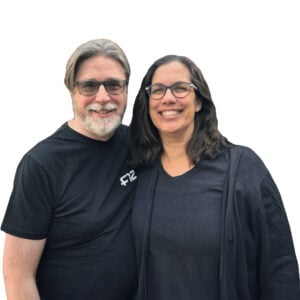
Mike serves on eldership within Joshua Generation Church, South Africa. He is married to Chantal, and they have two daughters. He loves to see people equipped to effectively serve the Kingdom of God through teaching and writing.
Sessions