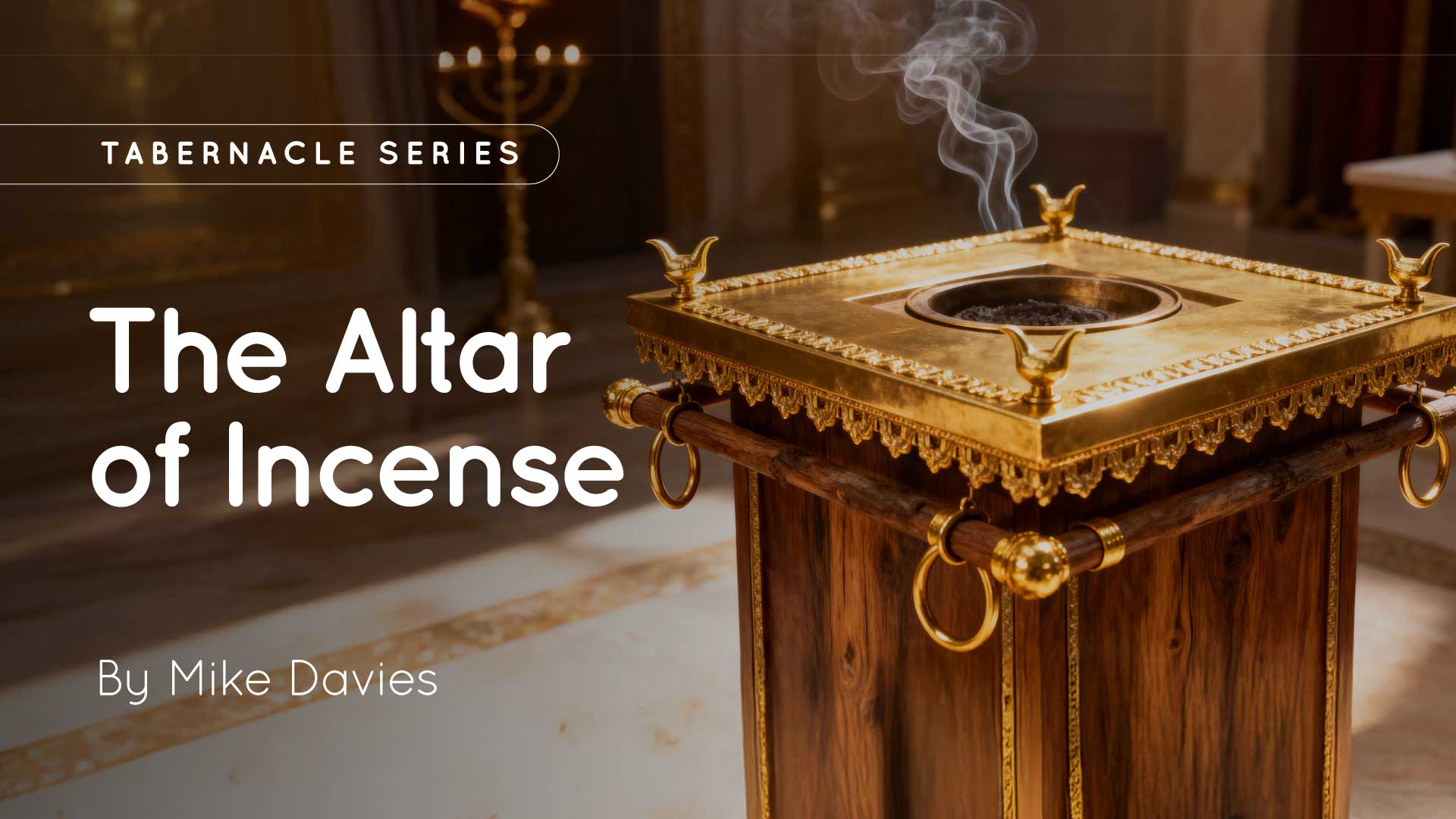

When God spoke to Moses on Mount Sinai, He gave him precise instructions: “See that you make everything according to the pattern that was shown you on the mountain.” – Exodus 25:40
God wasn’t commissioning Moses to build an ordinary structure. He was giving a divine blueprint for a dwelling—a house where He would live among His people. Every measurement, every material, every detail was intentional. God desired a place for His presence, a sacred space that reflected His glory and holiness.
Paul echoes this same truth in the New Testament, applying it to the church:
“In Him you also are being built together into a dwelling place for God by the Spirit.” – Ephesians 2:22
The tabernacle then serves as a type, or shadow; a physical structure that points to a greater spiritual reality—the church. Just as the tabernacle was to be a dwelling for God in the wilderness, the church—composed of believers—is now God’s house, built together by His Spirit. The church was no afterthought; it is part of God’s eternal plan:
“…so that through the church the manifold wisdom of God might now be made known to the rulers and authorities in the heavenly places. This was according to the eternal purpose that he has realized in Christ Jesus our Lord, in whom we have boldness and access with confidence through our faith in him.” – Ephesians 3:10
Paul’s warning to church leaders reminds us that how we build matters: “According to the grace of God given to me, like a skilled master builder I laid a foundation, and someone else is building upon it. Let each one take care how he builds upon it.” – 1 Corinthians 3:10
We are stewards of God’s house. Just as Moses was entrusted with exact instructions, we must also build carefully, following God’s pattern for His church. However, while the tabernacle was built according to the divine pattern, later structures differed. Solomon’s temple was far larger and grander and was made of stone. The second temple differed again. How could God be pleased with all of them if they weren’t all built according to the same pattern?
The key was not in outward appearance, size, or architectural detail, but in the essentials—the elements that reflected God’s presence and purposes. The furniture and layout were the same at their core: the altar, the washbasin, the lampstand, the table of showbread, the altar of incense, and the ark of the covenant. These fundamental features preserved the pattern God required and allowed Him to dwell among His people. Likewise, today, congregations may look different in style, size, and demographics, but must contain those essential elements that God ordained in Scripture.
Hebrews reminds us that the tabernacle was not merely symbolic or arbitrary: “They serve at a sanctuary that is a copy and shadow of what is in heaven.” – Hebrews 8:5
Everything in the tabernacle points forward to Christ and the church. It is a heavenly design manifested on earth—a template for God’s dwelling. Each of the articles of furniture had a purpose in the tabernacle, and has a purpose in teaching us today what the essential elements of the house are to be built in an acceptable manner, for the presence of God.
As we shall see in subsequent articles, in order to access the Holy of Holies, the place where God’s presence dwelt, it was necessary first for the priests to minister in the Holy Place. The furniture in the Holy Place corresponds to the four key elements of devotion in Acts 2:42: the apostle’s teaching (the Word is represented by the lampstand), breaking bread and fellowship (the table of showbread), and prayer (the altar of incense). God’s plan for a healthy church has always been the same, and we would be foolish to try to build without these essential elements.